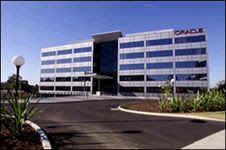
On a recent trip to Malaysia, I asked two local people how to get to a landmark, and I got two different answers. I realised though that without a common reference (map), I had no idea where the goal was, how I was going to get there, and whether the routes that were suggested were sound. Needless to say, I eventually got to my destination, much to delight of my taxi driver who financially benefited from the scenic journey!
Watching the palm trees fly past my taxi window I came to think about the state of architectures in organisations. We have all got to some state of working architecture. Architectures have grown organically or by acquisition as businesses have become successful. During the 1990’s COTS (Commercial off the Shelf) applications dominated the software architectural landscape with the promise of delivering pre-built industry processes. While the success of COTS applications delivering business value cannot be negated, as business requirements evolve, COTS applications have been customised, extended, and application bolt-ons and integration work have been inextricably bound to the actual application. All these tightly coupled “modifications” could become a major contributor towards the cost of an application upgrade, so much so it could even prohibit an organisation enjoying the benefits of a new version of their COTS application.
So how can we reduce the cost of ownership around COTS on the one hand, and at the same time improve the level of flexibility offered to the business?
Lets look at the cost of ownership challenge, particularly with regards upgrades. Today, many COTS applications such as Oracle E-Business Suite, JD Edwards, PeopleSoft and Siebel are service enabled. By using a services approach, application customisations, extensions and integrations can be built in a decoupled (loosely-coupled) manner. In other words service orientation can directly address the issues of customisations and extensions that are traditionally tightly bound to the application database schema and integrations that are point-to-point and heavily scripted, thereby facilitating smoother and cheaper application upgrades. Helio reduced their application integration effort by 50% through utilising reusable services.
What about flexibility? Using the same services approach, services from your COTS applications can be consumed and reused in numerous ways to form new composite applications or form part of flexible, enterprise-wide business processes. By decoupling the reliance of a business process to the underlying applications, the impact of application upgrades would be reduced, the speed of development work would be improved and flexibility will be introduced at the business process tier. ABN Amro and Dallas Fort Worth Airport are examples of organisations that benefited from adopting a process-centric approach to their business.
If you are wondering how you can go about maximising the value of your COTS investment, check out the Best Practice sites I found below…
E-Business Suite
PeopleSoft
JD Edwards
Siebel

Showing posts with label SOA. Show all posts
Showing posts with label SOA. Show all posts
Wednesday, August 19, 2009


Monday, May 11, 2009
Kiss and Tell
It's a kiss and tell SOA expose from The Red Room. The kiss is of course, 'keep it simple stupid' and I'm going to tell you all about it.
Continuing our occasional series here on the Red Room where Saul, Richard and I discuss 10 mistakes that cause SOA to fail.
One of the things I really like about SOA is the fact that it is deja-vu all over again. We've all been here before. COM/DCOM, CORBA, Object Oriented Programming, VB, Java... you name it. Central to each of these endeavours are some broadly shared concepts around abstraction, independence, reuse and so on. SOA is the next evolution of what we in IT have been trying to do since the Harvard Mark II was introduced to the Harvard Mark I. That is, keep it simple, or as described in the principles of the Agile Manifesto, "Simplicity - the art of maximizing the amount of work not done - is essential".
SOA is the latest, greatest, and indeed simplest way we've come up with to express this. There is a world of underlying complexity beneath simply booking your airline ticket or making a phone call or twittering absent mindedly from the bus stop. The complicated bits and bytes of 32 bit and 64 bit architectures. Of programming languages and compilers. Of formats and protocols and data structures. SOA allows us to simplify all that. It allows us to present to our business masters a set of capabilities that are interoperable, unbreakable, composable and reusable (thanks ZapThink).
Why do we make life so complicated? And this isn't just the IT industry, although lets face it we're pretty good at it. SOA give us the simplest way to present all the complex hard work we do it IT to the outside world. Yes there is a whole lot of iceberg under the water that is unseen but that's how it should be I think. We should be able to talk about what we do in simple terms, we should be able to make ourselves understood, or we'll all end up like 'Comic Book Guy' .
Homer: Welcome to the Internet, my friend. How can I help you?
Comic Book Guy: I'm interested in upgrading my 28.8 kilobaud Internet connection to a 1.5 megabit fiber optic T1 line. Will you be able to provide an IP router that's compatible with my token ring Ethernet LAN configuration?
Homer (staring blankly): Can I have some money now?
I'm not for a moment suggesting that implementing SOA correctly is simple. It isn't. It is a serious undertaking that needs serious planning and serious people to do it properly. But unless we focus on the simplicity instead of the complexity we're just going to make it un-necessarily hard for ourselves and our users. It's not rocket surgery after all.
Friday, April 3, 2009
Viewing SOA as a project instead of an architecture
Recently a lot has been written about SOA's failure to deliver results and ROI. Wherever you turn you will find blogs, articles and opinion pieces saying what amounts to "At last the snake oil is exposed. Flush and lets ...".
And that's thing thing isn't it? Lets what exactly?
Lets go cloud computing? Lets go Web 2.0? Lets go mash-ups? Or whatever. Thing is will any of these turn out any different to the perceived failure of SOA in 5 years time? Why would they? Most of these concepts borrow from SOA ideas which were based on ideas that came before that. I am reminded of Larry Ellison describing the IT industry as being "more fashion-driven than women's fashion."
It all goes back to the fundamental truth that I often write and speak about . SOA/Distributed-computing/Web 2.0/Mash-ups/Cloud-computing/yada-yada-yada all need an architecture rather than the "let's go buy some software, do our project and be heroes". In fact this attitude is what created the mess that SOA et. al. was born to fix.
This was succinctly put by Anne Thomas Manes recently in a blog about called Measuring SOA Success/Failure. Anne's headlines are often read (eg. SOA is dead) but the content of what she writes is often not digested. Here are a few salient quotes that should be heard loud and clear:
- Most organizations that I've spoken with are using service-oriented middleware to do integration (SOI rather than SOA). Very few companies are actually re-architecting their systems...
- I have seen a small number of spectacular success stories. These companies have realized huge savings, they are able to deliver new solutions in significantly less time than before. All these companies adopted SOA as part of a much larger IT transformation effort...
- And just in case you miss my point, I still strongly encourage organizations to invest in SOA. But my primary recommendation is to focus on architecture rather than technology.
Here we see that most organisations use SOA to do point-to-point integration with Web Services. No wonder we see no value - all you achieve is add yet another technology to the mess.
The goal rather needs to be the rationalisation of IT. Effort needs to be applied to streamline the business process by reducing the complexity and the application and data layers. But this is difficult. It involves political fights as it cuts across fiefdoms. It involves the hard work of forward planning. Don't confuse what I'm saying to mean that you have to "boil the ocean" upon the embarking of the good ship SOA. Not at all. The SOA journey is taken as a number of steps but the before we leave the dock we need to know where we (the whole organisation) are going and why. Then each step can be taken in the right sequence - it can be taken in context with the other steps.
I am getting increasingly frustrated as each wave of IT technology is deemed to be a failure and the software products are invariably identified as the culprit. I am reminded of an old adage "a poor workman blames his tools". Doesn't matter how good the tools are - if you start building without a plan (architecture) don't cry if you make a mess.
Tuesday, March 24, 2009
Breathing Life into Applications with Middleware
Oracle recently published a special report on what strategies business can explore in uncertain times.
I would like to add further commentary on what the authors stated.
Businesses have, for the most part, invested heavily in acquiring and building applications to assist them in driving business efficiencies. With the widespread adoption of ERP though, I feel that differentiation has begun to fade. So maybe the question we could ask ourselves is, what can we do today to deliver rapid value, utilising existing applications investments, and provide a sustainable platform for future growth? In addressing the challenge above, a number of key organisations I know of are reevaluating the role middleware performs in their architectures. They have achieved remarkable short-term results in areas such as consolidation and business process efficiencies, while at the same time underpinning their broader business transformation strategies.
Cost reduction through consolidation is high on the priority list of CIO’s. Adopting a service-oriented approach can support application consolidation. By identifying key business services delivered by existing applications and key processes that will drive business value, organisations can determine which of their applications they can retire, retain, or build out to agile composite applications.
Replacing expensive and unmanageable point-to-point integration with reusable services can further reduce architectural complexity and associated costs, allowing for more effort and funding to be injected into projects that would contribute towards the differentiation of the business.
In the longer term, application upgrades prove to be costly due to the level of customisation and extension conducted during its lifespan. Moving an application to a major point release could cost 20% (see document under whitepapers) of the original implementation cost. Performing customisations in an upgrade resilient services layer supports application upgrade pain reduction!
To hear more about how middleware can support and enhance your applications investment, our Oracle Australia team, together with our customers, will be delivering sessions at this years Oracle User Group in Sydney on the 20th and 21st April. I will be there too! Together will Debra Lilley, an Oracle ACE from the UK, we will discuss and demonstrate how businesses can use process management to facilitate transformation and how easy it is to extend your Oracle applications using Oracle BPEL Process Manager. See you there!
I would like to add further commentary on what the authors stated.
Businesses have, for the most part, invested heavily in acquiring and building applications to assist them in driving business efficiencies. With the widespread adoption of ERP though, I feel that differentiation has begun to fade. So maybe the question we could ask ourselves is, what can we do today to deliver rapid value, utilising existing applications investments, and provide a sustainable platform for future growth? In addressing the challenge above, a number of key organisations I know of are reevaluating the role middleware performs in their architectures. They have achieved remarkable short-term results in areas such as consolidation and business process efficiencies, while at the same time underpinning their broader business transformation strategies.
Cost reduction through consolidation is high on the priority list of CIO’s. Adopting a service-oriented approach can support application consolidation. By identifying key business services delivered by existing applications and key processes that will drive business value, organisations can determine which of their applications they can retire, retain, or build out to agile composite applications.
Replacing expensive and unmanageable point-to-point integration with reusable services can further reduce architectural complexity and associated costs, allowing for more effort and funding to be injected into projects that would contribute towards the differentiation of the business.
In the longer term, application upgrades prove to be costly due to the level of customisation and extension conducted during its lifespan. Moving an application to a major point release could cost 20% (see document under whitepapers) of the original implementation cost. Performing customisations in an upgrade resilient services layer supports application upgrade pain reduction!
To hear more about how middleware can support and enhance your applications investment, our Oracle Australia team, together with our customers, will be delivering sessions at this years Oracle User Group in Sydney on the 20th and 21st April. I will be there too! Together will Debra Lilley, an Oracle ACE from the UK, we will discuss and demonstrate how businesses can use process management to facilitate transformation and how easy it is to extend your Oracle applications using Oracle BPEL Process Manager. See you there!
Thursday, February 12, 2009
All The President's SOA
I don't want to labour this point but it does make a nice introduction for what I want to write about this time out. I saw Paul Coby, CIO of British Airways present at a conference last year and one of his favourite phrases resonated with me, "There are no IT projects. Only business projects". He has a point. If you're doing technology for the sake of technology and not to help your customers or to improve your business then you're not doing it right. Now that's very easy for a high-flying CIO to say, how does he back it up. How, I wondered, does the thorny issue of executive sponsorship work itself out at BA?

Here's another quote for you, "There is nothing more powerful than an idea whose time has come." Victor Hugo this time. And, as I've blogged about before there is a single, simple, brilliant idea at the heart of SOA to prove that SOA's time has come, namely, building something once and re-using it is a good thing to do.

This famous quote of Victor Hugo is paraphrased in the movie 'The Contender'. As President Jackson Evans (Jeff Bridges) campaigns for his Vice Presidential nominee to be approved by the Senate he says "...there is no weapon as powerful as that of an idea whose time has come". As the nominee - Senator Laine Billings Hanson (Joan Allen) - finds out the idea is one thing,  having some executive sponsorship to back it up is another. And lets face it, there is no better executive sponsorship than that of the President of the USA.

You probably won't have that level of sponsorship for your SOA efforts, so you'll have to settle for executive rather than presidential. What do you need from that executive for your SOA to succeed? What areas do they need to think about to help and support SOA in your organisation?

I've identified six areas;

1. Business Strategy and Process: Organisations need IT implementations that support the business and its changing needs. This is all about thinking about the business project, not the IT project. This is about providing an environment that links the management and measurement of IT with the management and measurement of the business strategy. This is where your sponsor is a key sounding board and information resource. What are the KPI's of your organisation and how does your planning in IT help to achieve them?

2. Architecture: Nearly all organisations that I have worked in fund and build IT by projects in lines of business. This leaves enterprise-wide processes and integration to be considered as afterthoughts and creates a barrier to change. The A in SOA helps organisations build an IT environment based on standards, distribution, loose coupling, re-use and business process representation that is designed to respond to change and will operate and integrate at the enterprise level, the executive level.

3. Building Blocks: A lack of consistency and repeatability in IT implementation hinders most organisations in achieving their goals with respect to IT budgets and agility. The building blocks metaphor offers a common, standards-based foundation on which companies can deliver IT, providing a basis for achieving consistency and maximising the ability to repeat successes by reusing implementations and the core infrastructure.

4. Projects and Applications: As in point 2 above, IT is traditionally developed by projects within lines of business – often creating excessive spending on duplicate functionality and compromising the integrity of enterprise processes. Executive sponsorship here helps you to catalogue, categorise, and modernise functions offered by systems and applications – standardising the manner in which those functions are offered, while reducing redundancy and promoting consistency. Duplication goes down, re-use goes up.

5. Organisation and Governance: The organic growth of our organisations has yielded an IT infrastructure that is difficult to manage and costly to change. Concentrate on creating an organisational structure and mandate - executive sponsorship needed here if you're going to mandate anything by the way - to govern the delivery of IT in standard ways, thereby enabling IT to meet the needs of the business and optimise IT utility.

6. Costs & Benefits:The $64,000 question. What is this going to cost to build? How much is it going to cost to run? More importantly, what are the predicted benefits from using it? And remember, an IT benefit without a Business benefit is not a benefit at all. Key development metrics, productivity measures, reuse measures, general best practices and internal/external benchmarking. And how does all of that link back to the Business Strategy outlined in Point 1?

My Brazilian colleague Marcelo Simoes has also penned a take on this recently with his "Five-Step Action Plan for Executives". He makes several good points in his piece and I particularly like his Fifth step - The victory dance.

More Jeff Bridges to close with. You're probably not going to get The Dude to sponsor your SOA efforts. But get yourself a sponsor. One that can think big, start small and move fast.
Friday, January 23, 2009
Are you doing SOP’s instead of SOA?
Hi and hope you all had a great Christmas and all the best for the upcoming year!
This is the second blog in our SOA Governance series around a report that came out detailing the ten common mistakes in doing SOA that cause it to fail. I am going to address the second reason which is underestimating the impact of organisational change. I am very much in agreement with this sentiment and we at Oracle, while we sell SOA technology, believe that SOA is really more a state of mind than anything else. I also do not think this key issue that gets as much airtime as it should. In fact the mis-application of SOA at the isolated project level rather than the enterprise level largely determines whether you are doing what might be called Service Oriented Projects (SOP’s) or whether you are changing the culture and organisational behaviour with a truly transforming Service Oriented Architecture.
Well let’s get started. In any business initiative that involves technology there are three things that need to work together – people, tools and methodology. This is true with SOA but with an extra emphasis on the people component. Actually organisational change is really at the heart of SOA. If we go back to the beginning, SOA is all about making the business more adaptable to change. Why is this an issue? Because the processes and systems we have to support us are so rigid, so slow, so difficult to modify that they have become obstacles to future success. These process and system difficencies have been caused by many years of “oiling the squeeking wheel”. What I mean by that is mostly no-one has been really willing to tackle the problems at the core of the enterprise – they just focus on their particular project and seek to deliver it cheaply and quickly. That is not bad in itself its just that each project done this way adds just a little bit more inter-system dependency, a little more tight coupling, a few more duplicated modules… You get the idea I think.
Why do we take this approach? Well its simple – the metrics by which we are measured encourage us to do so. Fast, cheap, self contained projects are viewed as successful. If we get kudos for this we do it again. Its also simpler than trying to fit in with what other parts of the organisation are doing.
SOA is about changing all this isn’t it? We want to streamline the organisation processes. We want a common set of data definitions. We want a re-usable library of services. We want common tools and consistent methodologies. The problem should be now self evident - we are talking about cultural change as much as Web Services and XML and UDDI. Guess what is easier to do – change the culture or learn the SOA technologies?
The bottom line is this – if you don’t try and change the culture of the organisation you are not really doing SOA. How can I say that? Well if you use SOA technologies and basically build a point-to-point architecture (so you don’t have to worry about any other project in the organisation) then you are not doing SOA you are doing SOP's. You are just using SOA tools to build the same things you did before. Is there any real value in doing that? Apart from learning how to build and use Web Services, ESB’s, BPEL etc - not really.
Is this what is happening? Have people invested in SOA tools but not taken a true SOA approach? Have they then expected to see cross organisation value that didn’t appear and then said “SOA doesn’t deliver what the vendor promised me?”
Recently on Kate Carruthers blog she spoke about why reuse fails. Guess what – its because of the psychology – its about the people – its about resistance to change - its about wanting to keep my project isolated and independent of the other. Reuse is just one aspect of SOA (albeit an often overhyped one). To really make SOA work we need to think in a process oriented way because that’s how our suppliers, customers and partners interact with us. We need to structure our organisation around these processes and measure the effectiveness of the lines of business in supporting them. If we do this the all IT projects are subordinate to the process and must work to make it efficient, flexible, fast and available. Then and only then will any technology – including SOA – really deliver measurable business value.
Thursday, January 8, 2009
SOA is just fine…thank you
"The rumours of my death have been greatly exaggerated" Mark Twain
So…SOA is dead. Apparently it died on the 1st of January 2009, so said Anne in her Burton Blog. With the recession, SOA budgets are being slashed; countless failures abound, with the odd success peaking above the sea of despair. The doom and gloom prophets are all saying, “we told you so”. So we turn our heads to some new saviour, the SOA offspring of mashups, SAAS and clouds.
The wrong approach
So why is there so much disillusionment? Probably because a lot of people just did not get it and the approaches they took were wrong. The recession has been a great opportunity for business to bullet wayward IT strategies that were not aligned to their business. So it is not a bad thing really. In my books, it is a good reality check. On the other hand SOA is old news, and our industry is often guilty of needing something new to talk about. But lets not go and run off to something new, when all it takes is understanding what we have today.
Getting back to basics
There is nothing wrong with SOA; in fact the intention of SOA to support transformation of organisations is pretty profound, but probably overwhelming for some. I agree with Anne when she said that SOA needs to be part of something bigger, such as organisational transformation. I have seen too many instances where organisations think that they are doing SOA, but all they are doing are technology projects focusing on aspects such as service-based integration, resulting often in poor ROI, no service reusability, and achieving no business alignment.
We have been afforded the opportunity, through many years of SOA experience, to reflect on what is required and what to avoid. Anne highlighted 10 reasons why SOA fails ranging from a lack of business alignment and case, through to skills and governance. Her arguments are sound and should be read by everyone who is interested in understanding what issues you need to address. David Linthicum in his five things articles talked about bigger issues at play, such as misrepresentation by vendors, and the requirement of strong leadership. While we can’t change some of things he spoke about, it is still good to be aware of what to watch out for.
Will SOA evolve, yes it will. That is a definite. But even with new approaches, we will still have to have the ground rules in place. There is no quick fix or magical elixir.
In the coming weeks the Red Room Team will discuss some key issues that need to be addressed if SOA-assisted transformation is to be successful.
Thursday, January 1, 2009
Happy New Year and Here's to 2009
Happy New Year to all our readers around the world from the team here in Australia.
First of all, I would like to take this opportunity to update you on our contributors here at Oracle. We would like to thank Barry Matthews and Steve Williamson for their contributions during 2008. Barry and Steve have moved to different roles within the organisation. We do welcome 3 new regular contributors to the Blog though, may I introduce to you...
Sean Boiling - who joins us from the Oracle Sales Consulting team. Sean has been contributing to the Blog for some time now and now becomes a regular contributor. Sean's interests lie in Fusion Middleware covering SOA, Enterprise 2.0, BPM, and the BEA-products we acquired during 2008.
Richard Ward - who joined Oracle Asia-Pacific in November 2008. Prior to this, Richard spent time with Oracle South-Africa - his homeland - and with one of our partners here in Sydney. Richard will focus on SOA with Saul Cunningham.
Marc Caltabiano - who is Oracle's Director of Enterprise Architecture for Australia and New Zealand, based in Melbourne.
Sean, Richard and Marc will be posting to the Red Room and join Carl, Saul and myself as regular contributors for 2009. Gareth Llewellyn, our roving-reporter in waiting, will continue to contribute on a specialist basis as he did during 2008 for the Oracle OpenWorld.
We aim to deliver more content, more regularly during 2009. We reach our 1-year anniversary in February and look forward to celebrating (virtually) with you all at that time. We have some special features coming up this year - starting with a 10-part series around SOA Governance that we know so many people are interested in (from the feedback you give us). We will continue with the Enterprise 2.0 product stack - talkling about our portal offerings and giving some real-world examples of where we have deployed the products for our customers and discussing some of the benefits that have been gained. IDM and Enterprise Architecture will also get some significant coverage this year - driven by some of the current business-challenges faced by organisations trying to support Web2.0 initiatives for example.
Here at the blog, we think that 2009 is going to be an incredibly interesting year around the world considering the current economic environment and the changing drivers for businesses as a whole. There will be a lot of consolidation, merging and acquisition during 2009 and beyond as organisations are challenged to respond to changing conditions and external pressures. This activity will affect our customers, our partners and our competition - the global marketplace for our technologies, products and solutions will change - our challenge is to prepare for this and be in the best position possible when it happens.
The greatest possible challenge for organisations is going to be adapting a business model to the Web2.0 way of doing business. During 2008, it was reported on several occasions that successful businesses were addressing end-user requirements through a collaborative approach. Rather than trying to second-guess what might be popular - these organisations actually listed to what their customers ask for and address these needs. This is based upon the simple principal that if you are selling something that somebody wants at the right price - they will probably buy it!
A Web2.0 approach introduces challenges for an organisation. There is structured and unstructured information to be managed, CRM and ERP systems to be intergrated with, Portals to be deployed and mass-security to manage. Ever-increasing storage requirements need to be met and the IT department is challenged with Green issues. Organisations want a complete solution from a single vendor, it has to be able to be integrated into any legacy system or application and must support an open standards approach to enable ease of development and supportability.
During 2009, we will concentrate on how organisations address these requirements and talk in-depth around Oracle's products and solutions in a non-sales manner. We realise that many of our readers want to learn about our offerings and this approach should provide some context for you all. Of course, if you want us to concentrate on something else - let us know and we welcome any feedback on the blog you want to give us.
We wish you a prosperous New Year
Paul, Carl, Saul, Richard, Gareth, Sean, Marc.
First of all, I would like to take this opportunity to update you on our contributors here at Oracle. We would like to thank Barry Matthews and Steve Williamson for their contributions during 2008. Barry and Steve have moved to different roles within the organisation. We do welcome 3 new regular contributors to the Blog though, may I introduce to you...
Sean Boiling - who joins us from the Oracle Sales Consulting team. Sean has been contributing to the Blog for some time now and now becomes a regular contributor. Sean's interests lie in Fusion Middleware covering SOA, Enterprise 2.0, BPM, and the BEA-products we acquired during 2008.
Richard Ward - who joined Oracle Asia-Pacific in November 2008. Prior to this, Richard spent time with Oracle South-Africa - his homeland - and with one of our partners here in Sydney. Richard will focus on SOA with Saul Cunningham.
Marc Caltabiano - who is Oracle's Director of Enterprise Architecture for Australia and New Zealand, based in Melbourne.
Sean, Richard and Marc will be posting to the Red Room and join Carl, Saul and myself as regular contributors for 2009. Gareth Llewellyn, our roving-reporter in waiting, will continue to contribute on a specialist basis as he did during 2008 for the Oracle OpenWorld.
We aim to deliver more content, more regularly during 2009. We reach our 1-year anniversary in February and look forward to celebrating (virtually) with you all at that time. We have some special features coming up this year - starting with a 10-part series around SOA Governance that we know so many people are interested in (from the feedback you give us). We will continue with the Enterprise 2.0 product stack - talkling about our portal offerings and giving some real-world examples of where we have deployed the products for our customers and discussing some of the benefits that have been gained. IDM and Enterprise Architecture will also get some significant coverage this year - driven by some of the current business-challenges faced by organisations trying to support Web2.0 initiatives for example.
Here at the blog, we think that 2009 is going to be an incredibly interesting year around the world considering the current economic environment and the changing drivers for businesses as a whole. There will be a lot of consolidation, merging and acquisition during 2009 and beyond as organisations are challenged to respond to changing conditions and external pressures. This activity will affect our customers, our partners and our competition - the global marketplace for our technologies, products and solutions will change - our challenge is to prepare for this and be in the best position possible when it happens.
The greatest possible challenge for organisations is going to be adapting a business model to the Web2.0 way of doing business. During 2008, it was reported on several occasions that successful businesses were addressing end-user requirements through a collaborative approach. Rather than trying to second-guess what might be popular - these organisations actually listed to what their customers ask for and address these needs. This is based upon the simple principal that if you are selling something that somebody wants at the right price - they will probably buy it!
A Web2.0 approach introduces challenges for an organisation. There is structured and unstructured information to be managed, CRM and ERP systems to be intergrated with, Portals to be deployed and mass-security to manage. Ever-increasing storage requirements need to be met and the IT department is challenged with Green issues. Organisations want a complete solution from a single vendor, it has to be able to be integrated into any legacy system or application and must support an open standards approach to enable ease of development and supportability.
During 2009, we will concentrate on how organisations address these requirements and talk in-depth around Oracle's products and solutions in a non-sales manner. We realise that many of our readers want to learn about our offerings and this approach should provide some context for you all. Of course, if you want us to concentrate on something else - let us know and we welcome any feedback on the blog you want to give us.
We wish you a prosperous New Year
Paul, Carl, Saul, Richard, Gareth, Sean, Marc.
Friday, November 7, 2008
Don't Give Up
Recently there have been reports of a SOA drop-off in the face of the financial crisis. The stories here and reports here that since the beginning of 2008 there has been a fall in the number of organisations that are planning to adopt SOA for the first time. These potential late adopters seem to be delaying SOA uptake or flat out deciding not to adopt SOA. The two key reasons for not adopting SOA are, according to the the reports, a lack of skills and a lack of a viable business case. Interestingly the reports also show that European organisations have a near universal uptake of SOA, the US a moderate uptake, while in Asia there is a distinct lag.
Does this make sense? Why does Europe find SOA compelling while Asia takes a much more cautious stance? Do the reasons for not up-taking SOA (lack of skills and lack of business case) have any relationship to the financial crisis? Or do they have more to do with culture and phase of economic development?
It is interesting to me that Europe leads the way in SOA adoption. This trend is also evident in other areas such as enterprise modelling. I think it reflects the more structured European approach that appreciates coherent design and long term planning. This is in contrast to the more pragmatic shorter term focus of the US.
Many parts of Asia are in a rapid process of ramping up their IT infrastructure. As such they have a choice – do they go for a quick project win that gives maximum short term business return or do they invest in an architected approach that costs more now but less over the longer term? Many organisations are in the process now of regretting the first of these approaches. It would be a major mistake for organisations to sacrifice the long term effectiveness of their infrastructures for the sake of short term gain even though it may be understandable that they may think along these lines because
of the uncertain financial situation.
Below is a graph showing the long term cost of different approaches. Over the longer term SOA is so much cheaper. If organisations had embarked on proper architected approaches earlier they would now be reaping the benefits of lower long term cost and so would be at significant competitive advantage in these difficult economic times. This is because SOA is a very cost-effective way of developing new processes and composite applications without big spending on new off-she-shelf applications.
Does this make sense? Why does Europe find SOA compelling while Asia takes a much more cautious stance? Do the reasons for not up-taking SOA (lack of skills and lack of business case) have any relationship to the financial crisis? Or do they have more to do with culture and phase of economic development?
It is interesting to me that Europe leads the way in SOA adoption. This trend is also evident in other areas such as enterprise modelling. I think it reflects the more structured European approach that appreciates coherent design and long term planning. This is in contrast to the more pragmatic shorter term focus of the US.
Many parts of Asia are in a rapid process of ramping up their IT infrastructure. As such they have a choice – do they go for a quick project win that gives maximum short term business return or do they invest in an architected approach that costs more now but less over the longer term? Many organisations are in the process now of regretting the first of these approaches. It would be a major mistake for organisations to sacrifice the long term effectiveness of their infrastructures for the sake of short term gain even though it may be understandable that they may think along these lines because
of the uncertain financial situation.
Below is a graph showing the long term cost of different approaches. Over the longer term SOA is so much cheaper. If organisations had embarked on proper architected approaches earlier they would now be reaping the benefits of lower long term cost and so would be at significant competitive advantage in these difficult economic times. This is because SOA is a very cost-effective way of developing new processes and composite applications without big spending on new off-she-shelf applications.

My question at the bottom of all this is simple – if you are not doing SOA what are you doing instead? Are you just building systems as you need, connecting them as you need? I have always felt that asking for a business case for SOA is meaningless. You don’t ask for a business case to use an architect or have an architecture when designing a building. You ask for a business case to build the building. But once you decide that the building is viable you don’t then have a business case for actually design it. It is assumed. Why is it that we treat IT in such a haphazard way?
--Saul Cunningham
Tuesday, August 19, 2008
BAE Takes SOA From 0-100 In 3 Months
Check out this latest Oracle Video on YouTube of Craig Mackereth, Manager of Business Systems, at BAE Systems Australia talking about the SOA journey that BAE has taken recently. As one of the leading defense organisations with huge global reach they face all the typical challenges of managing a complex distributed application infrastructure and more.
Craig talks of the classic need of a flexible, scalable IT infrastructure that supports the acquisition strategy typical of the defense industry. The acquisition strategy gives rise to a real need to rapidly link together disperate systems. Craig details how BAE used Oracle SOA Suite and Oracle Identity Managment Suite to link and secure Oracle eBusiness Suite HR, Finance and Maintenance Repair Systems to older legacy applications that needed to be kept in place with no changes. The use of SOA Suite in particular realised a responsive, more managable environment that supported future integration requirements arising from new acquisitions.
The work was done in 3 months with no prior knowledge of SOA and skillsets of many developers coming from Microsoft environments could be re-used with a small training effort. So much for the belief that SOA is too hard!
This system has since been given an Innovation Award at Oracle Open World in recognition of the rapid delivery of a valuable business solution. Its great to see real world examples of SOA in action.
[BTW there are plenty more Oracle videos at YouTube- just seach for "OracleVideo"].
Saul.
Craig talks of the classic need of a flexible, scalable IT infrastructure that supports the acquisition strategy typical of the defense industry. The acquisition strategy gives rise to a real need to rapidly link together disperate systems. Craig details how BAE used Oracle SOA Suite and Oracle Identity Managment Suite to link and secure Oracle eBusiness Suite HR, Finance and Maintenance Repair Systems to older legacy applications that needed to be kept in place with no changes. The use of SOA Suite in particular realised a responsive, more managable environment that supported future integration requirements arising from new acquisitions.
The work was done in 3 months with no prior knowledge of SOA and skillsets of many developers coming from Microsoft environments could be re-used with a small training effort. So much for the belief that SOA is too hard!
This system has since been given an Innovation Award at Oracle Open World in recognition of the rapid delivery of a valuable business solution. Its great to see real world examples of SOA in action.
[BTW there are plenty more Oracle videos at YouTube- just seach for "OracleVideo"].
Saul.
Tuesday, July 15, 2008
Oracle Launches iPhone Applications
There's been a lot of talk about the highly-anticipated 3g iPhone release last week. I queued up and got my hands on a 16gb Black model Thursday night and am very happy with the device. A lot of organisations are preparing to release their applications for the iPhone, taking advantage of a. the wider release and availability and b. the significantly faster connectivity provided through 3g.
Dennis Howlett, a long-time critiquer of Oracle's products, spoke last week on his blog about the first of our iPhone applications - Business Indicators. He found it 'hard to fault the company for piggybacking on a platform that is getting plenty of attention. Even better that it is offered as a free download'. Thank you Dennis!
Oracle's new applications are focussed on the business intelligence world where key decision makers require up-to-date access to critical business information. Te new applications allow finger-tip access to key business metrics and analytical data - Oracle is clear in saying that the iPhone solution is NOT intended to replace a complete user dashboard experience. The application, known as Oracle Business Indicators, uses the service-orientated-architecture (SOA) capabilities of OBIEE and Oracle Business Intelligence web services to access reports and metric data from within the OBIEE catalogue. Access to custom reports from this environment are not yet available. Security and access controls are also managed by OBIEE - this is the same solution for more traditional desktop users.
Coming soon will be applications that manage the 'Approval' of information - suitable for purchasing, recruitment and expense reporting. Also, to follow will be applications that support CRM and ERP environments amongst others. One of Oracle's competitors released their version of the BI application for the Blackberry in 2007. One of the key differences is the platform of course, Blackberry's are generally provided by an organisation to an individual whilst the iPhone has been traditionally procured by individuals. In a world where form-factor is as important as functionality - user-experience with the large touchscreen with be preferred to the smaller displays offered by Blackberries. The development kit provided by Apple for the iPhone will also be a strong reason why we may see iPhones becoming common tools within the corporate world.
Paul
Dennis Howlett, a long-time critiquer of Oracle's products, spoke last week on his blog about the first of our iPhone applications - Business Indicators. He found it 'hard to fault the company for piggybacking on a platform that is getting plenty of attention. Even better that it is offered as a free download'. Thank you Dennis!
Oracle's new applications are focussed on the business intelligence world where key decision makers require up-to-date access to critical business information. Te new applications allow finger-tip access to key business metrics and analytical data - Oracle is clear in saying that the iPhone solution is NOT intended to replace a complete user dashboard experience. The application, known as Oracle Business Indicators, uses the service-orientated-architecture (SOA) capabilities of OBIEE and Oracle Business Intelligence web services to access reports and metric data from within the OBIEE catalogue. Access to custom reports from this environment are not yet available. Security and access controls are also managed by OBIEE - this is the same solution for more traditional desktop users.
Coming soon will be applications that manage the 'Approval' of information - suitable for purchasing, recruitment and expense reporting. Also, to follow will be applications that support CRM and ERP environments amongst others. One of Oracle's competitors released their version of the BI application for the Blackberry in 2007. One of the key differences is the platform of course, Blackberry's are generally provided by an organisation to an individual whilst the iPhone has been traditionally procured by individuals. In a world where form-factor is as important as functionality - user-experience with the large touchscreen with be preferred to the smaller displays offered by Blackberries. The development kit provided by Apple for the iPhone will also be a strong reason why we may see iPhones becoming common tools within the corporate world.
Paul
Friday, May 16, 2008
Business Process Management Breakfast Seminar Series
Hi all,
we recently did a series of breakfasts around Australia covering most major cities. The topic was Business Process Management and its relationship to SOA. Over 300 people attended in Perth, Sydney, Melbourne, Brisbane and Canberra with very positive responses to a stimulating set of presentations and discussions.
The event saw four great presentations from:
 This diagram shows three parts of the BPM Lifecycle. The blue zone is where the Business Analysts using Oracle's BPA Suite document the business - people, systems, data and processes - and the relationships between them using a business oriented tool. These process designs are written to a shared repository that is read by IT developers using a technical tool called JDeveloper. This is the green zone. Here the process design (called a "blueprint") is wired up to the systems, people and business partners that are required to make it real and executable. Once deployed into the running process server the process is then monitored by a Business Activity Monitoring tool (the brown zone). This is a key part of Oracle's SOA Suite that allows a real time view of how business processes are meeting the Key Performance Indicators of the business.
If you want to know more then register for the most convenient of a series of workshops that Oracle and Leonardo Consulting are running in Sydney, Melbourne, Brisbane, Canberra, Adelaide and Perth. The workshops will provide an indepth understanding of how Business Analysts and IT developers can close the business IT gap and make their organisations more responsive to change. You will see the complete lifecycle of BPM from:
If you want to listen to one of the sessions the podcasts are below
we recently did a series of breakfasts around Australia covering most major cities. The topic was Business Process Management and its relationship to SOA. Over 300 people attended in Perth, Sydney, Melbourne, Brisbane and Canberra with very positive responses to a stimulating set of presentations and discussions.
The event saw four great presentations from:
- Professor Micheal Rosemann. Micheal is a world leading authority on BPM and a recognised thought leader. He spoke about the impact business process centricity is having on business, dimensions of success and future trends that are starting to emerge. Michael's presentation is available here.
- Mervin Chiang. Mervin is a Principal Consultant with Oracle's specialist BPM Partner Leonardo Consulting. Leoanardo are the leading organsiation in Australia skilled in BPM and the ARIS toolset. The ARIS products form the basis of Oracle's Business Process Analysis Suite (BPA Suite) that allows Business Analysts and IT Developers to work in unison around a shared repository of business process definitions. Mervin gave a demonstration of the Oracle BPA Suite and SOA Suites using a system Leonardo has developed to support their Quote-to-Cash process. Mervin's presentation is available here.
- Jack Harris. Jack is the Managing Director of the Watership Group. He has many years experience in helping organisations transform to be more agile using BPM approaches. Jack spoke about real world lessons learned from his involvement in several company changing initiatives at Fonterra. Fonterra uses Oracle SOA Suite and BPA Suite to streamline and refine their key business process. Jack's presentation is available here.
- Saul Cunningham. Saul is the SOA Business Development Lead - Oracle ANZ. Saul spoke about how BPA Suite and SOA Suite work together. The key to understanding this is shown in the picture here:
 This diagram shows three parts of the BPM Lifecycle. The blue zone is where the Business Analysts using Oracle's BPA Suite document the business - people, systems, data and processes - and the relationships between them using a business oriented tool. These process designs are written to a shared repository that is read by IT developers using a technical tool called JDeveloper. This is the green zone. Here the process design (called a "blueprint") is wired up to the systems, people and business partners that are required to make it real and executable. Once deployed into the running process server the process is then monitored by a Business Activity Monitoring tool (the brown zone). This is a key part of Oracle's SOA Suite that allows a real time view of how business processes are meeting the Key Performance Indicators of the business.
If you want to know more then register for the most convenient of a series of workshops that Oracle and Leonardo Consulting are running in Sydney, Melbourne, Brisbane, Canberra, Adelaide and Perth. The workshops will provide an indepth understanding of how Business Analysts and IT developers can close the business IT gap and make their organisations more responsive to change. You will see the complete lifecycle of BPM from:
- business process conception
- design in the business domain using BPA Suite (ARIS)
- transfer to IT using a shared repository approach
- construction of executable process in Jdeveloper
- deployment of process to Oracle BPM (BPEL)
- and monitoring of process with BAM
If you want to listen to one of the sessions the podcasts are below
Friday, May 2, 2008
WEB 2.0 for the Enterprise Technology Day
We have just completed the first Oracle Technology days for WEB 2.0 and the Enterprise. Attendance was quiet strong and from the feedback we have a lot of people wanting to know more about how to commence the journey of WEB 2.0 in the Enterprise.
A unique feature of these two events in Sydney and Melbourne was that Oracle utilised partners that are domain experts to deliver the content around Portal, SOA integration, Security for Mashups and Content Management for WEB 2.0.
Attached are the presentations from the events. If you would like to know more information please contact me or the relevant partner. Shortly we will publish the podcast that correspond to each presentation and also details of the follow up workshops. The workshops will allow each of you to get a hands on feel for how to integrated the various components of Fusion Middleware into existing corporate applications to gain WEB 2.0 experiences.
At the end of the 4 sessions we had a preview of Oracle's Social CRM or Seibel On Demand V15. Some WEB 2.0 features of this product i can see as offering real usability and productivity advantages to sales teams or anyone that is involved with customers. These features included integrated Instant Message IM, ability to leverage public API's from social sites liked linkedin to see how you can link to someone, for instance imaging if you need to contact a CFO within an account. You may now his/her name but that's it, if your sponsor doesn't have access what do you do? Well with these API's like linked in you could simply click a button within your CRM and the magic of WEB2.0 would occur. The result could be a list of people you know who can introduce you through their contacts to the CFO. We all know an introduction will be more successful than any form of cold call or unannounced introduction. Another feature is the ability to maintain customers contact information by leveraging their details with consent of course from these sites. Another feature was the ability to integrate portlets or widgets of CRM functionality into external portal sites such as iGoogle. All of this functionality is possible in your current CRM systems by leveraging the solution sets in Fusion Middleware.
Presentations
Session 1 Oracle Portal Usability and Accessibility for WEB 2.0 Applications by Allan Jansen - UberConsult
Session 2 Enabling Enterprise Integration for WEB 2.0 Applications by Jerry Gaines - Intelligent Pathways
Session 3 Enabling and Securing WEB 2.0 Applications by Antony Krilis - Agreon
Session 4 Content Management for WEB 2.0 by Phil Hoppe - Astral
Enjoy the presentations and thank you for attending.
Carl Terrantroy
A unique feature of these two events in Sydney and Melbourne was that Oracle utilised partners that are domain experts to deliver the content around Portal, SOA integration, Security for Mashups and Content Management for WEB 2.0.
Attached are the presentations from the events. If you would like to know more information please contact me or the relevant partner. Shortly we will publish the podcast that correspond to each presentation and also details of the follow up workshops. The workshops will allow each of you to get a hands on feel for how to integrated the various components of Fusion Middleware into existing corporate applications to gain WEB 2.0 experiences.
At the end of the 4 sessions we had a preview of Oracle's Social CRM or Seibel On Demand V15. Some WEB 2.0 features of this product i can see as offering real usability and productivity advantages to sales teams or anyone that is involved with customers. These features included integrated Instant Message IM, ability to leverage public API's from social sites liked linkedin to see how you can link to someone, for instance imaging if you need to contact a CFO within an account. You may now his/her name but that's it, if your sponsor doesn't have access what do you do? Well with these API's like linked in you could simply click a button within your CRM and the magic of WEB2.0 would occur. The result could be a list of people you know who can introduce you through their contacts to the CFO. We all know an introduction will be more successful than any form of cold call or unannounced introduction. Another feature is the ability to maintain customers contact information by leveraging their details with consent of course from these sites. Another feature was the ability to integrate portlets or widgets of CRM functionality into external portal sites such as iGoogle. All of this functionality is possible in your current CRM systems by leveraging the solution sets in Fusion Middleware.
Presentations
Session 1 Oracle Portal Usability and Accessibility for WEB 2.0 Applications by Allan Jansen - UberConsult
Session 1 Oracle Portal Usability and Accessibility for WEB 2 0 Applications by Allan Jansen - UberConsult - Upload a doc
Session 2 Enabling Enterprise Integration for WEB 2.0 Applications by Jerry Gaines - Intelligent Pathways
Session 2 Enabling Enterprise Integration for WEB 2 0 Applications by Jerry Gaines - Intelligent Pathways - Upload a doc
Session 3 Enabling and Securing WEB 2.0 Applications by Antony Krilis - Agreon
Session 4 Content Management for WEB 2.0 by Phil Hoppe - Astral
Enjoy the presentations and thank you for attending.
Carl Terrantroy
Tuesday, April 15, 2008
Video Podcasting
Over the past few weeks, the team here at Oracle has been working on leveraging video to assist with our messaging. The exercise has been interesting to say the least, people have different ways of presenting and the method of capturing this on video lends itself to a number of challenges. Anyway, after a couple of concepts we have come up with a format that with a little extra tweaking should prove to be informative.
The short version of the video is below, have a look and please feel free to pass back comments through this blog. We look forward to any feedback as always.
Paul
The short version of the video is below, have a look and please feel free to pass back comments through this blog. We look forward to any feedback as always.
Paul
Thursday, February 28, 2008
Same Old Architecture?
Is SOA oversold? Do vendors present it as a White Knight to all IT woes? Will it go the way of previous failed attempts to build a standard architectural model - things like CORBA, DCE etc. In short does SOA really stand for Same Old Architecture or Snake Oil Applied?
Each day we hear the trumpeting of vendor marketing machines promising a land of milk and honey to those who will simply plonk down some of their hard earned for a SOA license or three! I guess its easy to get caught up in the hype or become skeptical.
Oracle is clearly betting its business on SOA. In a recent article in Infoworld titled "Oracle's Ellison: SOA migration a slow process" Larry Ellison highlights the fact that SOA is an architectural revolution where the ultimate payback is in the 10-20 year timeframe. Jumping on this time-frame as a perceived failing the One Size Doesn't Fit All blog says that this proves that SOA is over-priced, over-promised and overkill. If you Google "SOA" and "skeptic" you will find plenty of other takers.
Who is right? Is the SOA phenomenon going to unravel and we will all look back in a few years time and laugh or will the skeptics be proved wrong?
I think its worth stepping back a minute and thinking about where we are and how we got here. Prior to SOA there was no such thing as a true industry consensus. CORBA, DCE and similar moves all amounted to a group of vendors trying to offset entrenched market power belonging to an IBM or Microsoft. The ideas in these architectures are good and many live on in SOA. However these movements failed. This was due to many reasons such as timing and complexity but ultimately due to the dilemma of trying to sell the idea of an "industry" standard when the largest and most important vendors were not participating.
Around 2000 things started to change. The Internet was in full swing. The idea of a simple set of standards that allowed the web to work in the Person-to-System mode (i.e. Web browser to Web Server) suddenly seemed to hold much promise for System-to-System communications too. The web had a data format (HTML) and protocol (HTTP) and it didn't really matter (that much!) which browser I used [IE, Netscape (remember that?)] or if the the web server application was written in Java, PHP, CGI or anything else it all just worked so easily and the benefits were so great.
Smart people started thinking "why don't we use this same mechanism for System-to-System communications". And so the idea of a Web Service was born - XML data, HTTP protocol. The language you implement the client or the server in - irrelevant. [I still have presentations from my days at BEA that used the term Web 2.0 to describe this System-to-System interoperability! - Maybe we are up to Web 3.0 now, or is it 4.0?] Now as time went by extra things needed to be added: security, context, transactions, addressing... and more. All these things mimicked ideas and techniques that existed in the worlds of DCE and CORBA.
Was SOA better than these in a purely technical sense - maybe, maybe not - its not really important. What is really important is that for the first time the main vendor combatants - Oracle, IBM, Microsoft, SAP, BEA, Tibco, ... agreed and because of this everyone else agreed that SOA was goodness and they would support it. And not just support it with their lips but with their wallets too. In Oracle's case this meant spending billions on the rebuilding of all of the acquisitions we have acquired. SAP is rebuilding its applications around SOA too. Microsoft is committed to SOA, as is IBM. Real dollars are being spent because customers want the interoperability between different vendors software components in the same way they have it in the building industry, the electronics industry and all other mature and responsible industries that truely serve their customers.
Its for this reason mostly that I believe SOA has legs and will last and will be the architectural platform on which future IT will be built. Think about it - if the largest purchases that organisations make - their applications - come as SOBA's (Service Oriented Business Applications) then doesn't that kind of dictate the internal IT architecture to a large degree. Don't forget that one of the key drivers for the success of the Oracle database was its use underneath all the major package application solutions.
Now lets return to the question we started with. Do vendors over-promise or over-sell SOA? Maybe but that happens with everything - its the nature of sales. It doesn't mean the concept is wrong. What if it takes 10-20 years to get to SOA heaven? Maybe that's the price we have to pay for building our IT systems in such a piecemeal, stovepipe fashion. There is a lot of untangling to do before we can start to move forward. One thing is clear though - the longer we procrastinate the more tangled the mess becomes and the greater the day of reckoning.
So some tips:
Thanks for stopping by.
Saul.
Each day we hear the trumpeting of vendor marketing machines promising a land of milk and honey to those who will simply plonk down some of their hard earned for a SOA license or three! I guess its easy to get caught up in the hype or become skeptical.
Oracle is clearly betting its business on SOA. In a recent article in Infoworld titled "Oracle's Ellison: SOA migration a slow process" Larry Ellison highlights the fact that SOA is an architectural revolution where the ultimate payback is in the 10-20 year timeframe. Jumping on this time-frame as a perceived failing the One Size Doesn't Fit All blog says that this proves that SOA is over-priced, over-promised and overkill. If you Google "SOA" and "skeptic" you will find plenty of other takers.
Who is right? Is the SOA phenomenon going to unravel and we will all look back in a few years time and laugh or will the skeptics be proved wrong?
I think its worth stepping back a minute and thinking about where we are and how we got here. Prior to SOA there was no such thing as a true industry consensus. CORBA, DCE and similar moves all amounted to a group of vendors trying to offset entrenched market power belonging to an IBM or Microsoft. The ideas in these architectures are good and many live on in SOA. However these movements failed. This was due to many reasons such as timing and complexity but ultimately due to the dilemma of trying to sell the idea of an "industry" standard when the largest and most important vendors were not participating.
Around 2000 things started to change. The Internet was in full swing. The idea of a simple set of standards that allowed the web to work in the Person-to-System mode (i.e. Web browser to Web Server) suddenly seemed to hold much promise for System-to-System communications too. The web had a data format (HTML) and protocol (HTTP) and it didn't really matter (that much!) which browser I used [IE, Netscape (remember that?)] or if the the web server application was written in Java, PHP, CGI or anything else it all just worked so easily and the benefits were so great.
Smart people started thinking "why don't we use this same mechanism for System-to-System communications". And so the idea of a Web Service was born - XML data, HTTP protocol. The language you implement the client or the server in - irrelevant. [I still have presentations from my days at BEA that used the term Web 2.0 to describe this System-to-System interoperability! - Maybe we are up to Web 3.0 now, or is it 4.0?] Now as time went by extra things needed to be added: security, context, transactions, addressing... and more. All these things mimicked ideas and techniques that existed in the worlds of DCE and CORBA.
Was SOA better than these in a purely technical sense - maybe, maybe not - its not really important. What is really important is that for the first time the main vendor combatants - Oracle, IBM, Microsoft, SAP, BEA, Tibco, ... agreed and because of this everyone else agreed that SOA was goodness and they would support it. And not just support it with their lips but with their wallets too. In Oracle's case this meant spending billions on the rebuilding of all of the acquisitions we have acquired. SAP is rebuilding its applications around SOA too. Microsoft is committed to SOA, as is IBM. Real dollars are being spent because customers want the interoperability between different vendors software components in the same way they have it in the building industry, the electronics industry and all other mature and responsible industries that truely serve their customers.
Its for this reason mostly that I believe SOA has legs and will last and will be the architectural platform on which future IT will be built. Think about it - if the largest purchases that organisations make - their applications - come as SOBA's (Service Oriented Business Applications) then doesn't that kind of dictate the internal IT architecture to a large degree. Don't forget that one of the key drivers for the success of the Oracle database was its use underneath all the major package application solutions.
Now lets return to the question we started with. Do vendors over-promise or over-sell SOA? Maybe but that happens with everything - its the nature of sales. It doesn't mean the concept is wrong. What if it takes 10-20 years to get to SOA heaven? Maybe that's the price we have to pay for building our IT systems in such a piecemeal, stovepipe fashion. There is a lot of untangling to do before we can start to move forward. One thing is clear though - the longer we procrastinate the more tangled the mess becomes and the greater the day of reckoning.
So some tips:
- Realistic expectations. Don't expect to install "SOA" and have it fix things for "free" that require human neural activity. At the end of the day it is a tool and not a solution. Applying the tool to the business problem creates the solution at the price of some thinking (sometimes quite difficult thinking). The same solution can be crafted with older, proprietary, simpler tools but it will lack openness and future flexibility of SOA.
- Don't try and boil the ocean. Start small. Pick a broken part of the organisation that upon fixing will yield a valuable result. The problem should not be of the "Hello World" variety nor should it be a "Boil the Ocean" type either. The first will be viewed as trivial the second is doomed to failure.
- Don't believe the all hype. Of course vendors will present their wares in the greatest possible light. That's only natural. Beware of over-promise. The corollary to this of course is that as SOA is an architecture and a long term journey the SOA tool you pick is more important than you might think. It needs to have synergy with your current investments like say your applications and this is more important than any current advantage in terms bells and whistles hype. It's also important that your SOA tool vendor will exist into the future. As we have seen in recent times that is not always as clear cut as what you might expect.
Thanks for stopping by.
Saul.
Wednesday, February 27, 2008
Hi from Saul
 Hi,
Hi,my name is Saul Cunningham and many of you will have met me in my travels as I go about spreading the message of Oracle Fusion Middleware and in particular the SOA layers [which of course are the most important! ;) ]. I am the GTMI Lead for SOA and my main role is getting other people as excited about Oracle SOA as I am!
Speaking of excitement I believe Oracle is THE place to be as the industry consolidates. It is good to know you are with an organisation that has the muscle and vision to emerge at the end of this period when there is so much flux occuring and everyone seems to be wondering who will buy whom next. I have been at Oracle for nearly four years and the company I worked for previously (BEA) is the latest in a long line of acquistions that Oracle has made. The result of this is that not many companies have the breadth and depth of Oracle. Our goal is to be able to provide any customer the solution to any problem they might have. Of course bringing these acquisitions together is a challenge - a challenge that is being addressed by Oracle Fusion Middleware. Oracle really does "eat its own dogfood" - as our leader Larry Ellison is fond of saying - and the proof of that is in the eating! We are using the integration, process management and activity monitoring capabilities of the SOA Suite components of Fusion Middleware to bring all the applications together into one happy family known as Fusion Apps.
So its great to know that the area I represent - Oracle SOA - is key to Oracle's future. It means I can passionately believe in the product I represent. So if you have heard me speak about SOA, and Oracle's capabilities in this area, and wonder why I seem so excited by it - well now you know why.
Saul.
Subscribe to:
Posts (Atom)